






Web3 and Blockchain Trends for 2026 – NFTs, Decentralized Apps, Crypto Payments
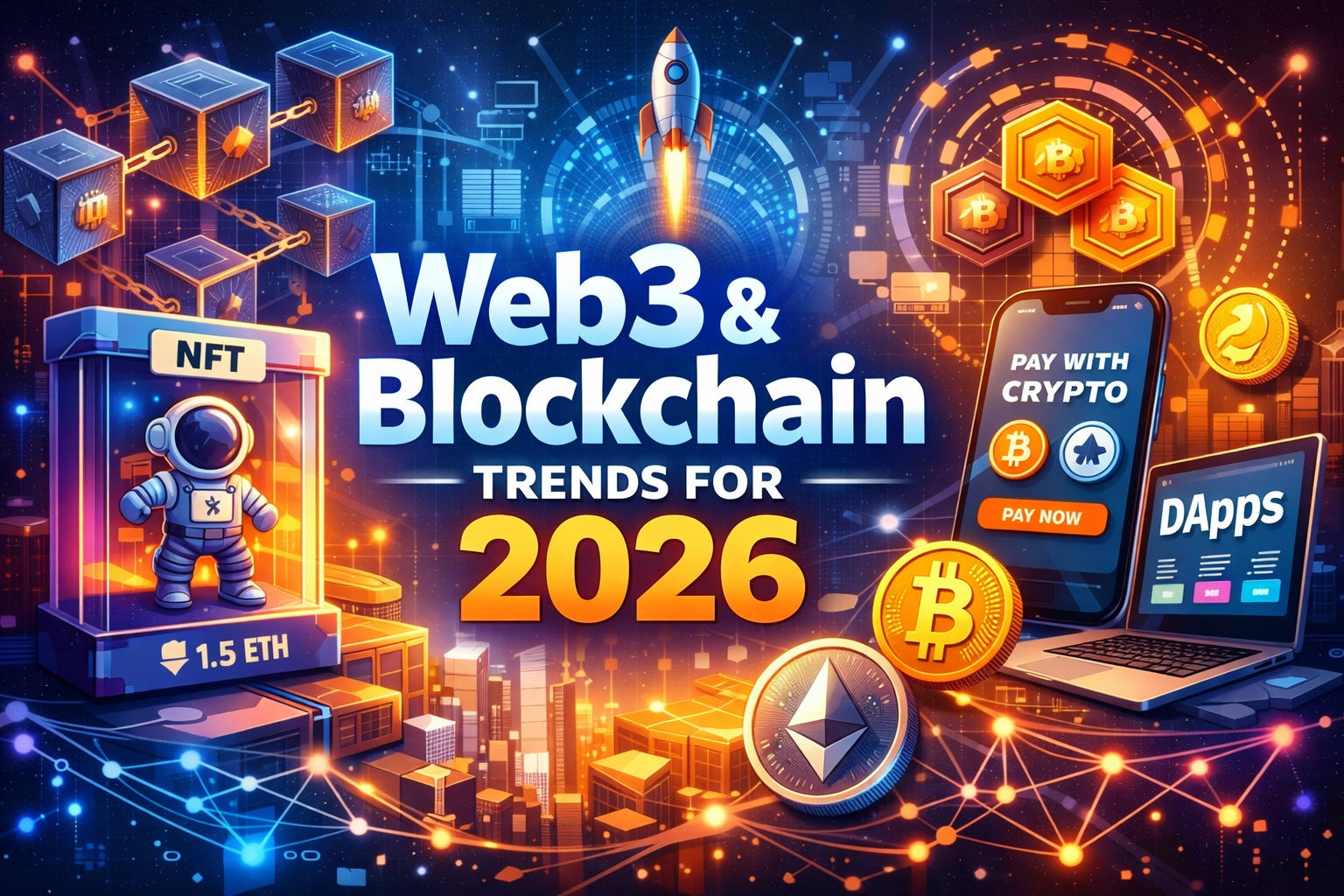
The digital world is evolving at an unprecedented pace, and Web3 and blockchain technologies are leading the charge. By 2026, these technologies are expected to reshape the way we interact online, how businesses operate, and how value is exchanged globally.
What is Web3?
Web3 is the next generation of the internet, powered by blockchain, decentralization, and token-based economics. Unlike Web2, which relies on centralized platforms and servers, Web3 gives users more control over their data, identity, and digital assets.
Some key features of Web3 include:
- Decentralization: No single entity controls the data or network.
- Ownership: Users truly own their digital assets, including NFTs, tokens, and digital identities.
- Transparency: Blockchain technology ensures transactions are traceable and immutable.
- Permissionless: Anyone can participate without central approval.
Blockchain as the Backbone of Web3
Blockchain is the underlying technology that makes Web3 possible. It is a distributed ledger that records transactions across multiple nodes, ensuring security, transparency, and decentralization. In 2026, blockchain applications will extend far beyond cryptocurrency, including supply chain management, healthcare, finance, and entertainment.
Why 2026 is Critical for Web3
Web3 adoption has grown steadily, but 2026 is expected to be a pivotal year due to:
- Increased institutional adoption: Major companies are exploring decentralized finance (DeFi) and blockchain-based services.
- Advancements in NFTs: Beyond art and collectibles, NFTs are entering gaming, music, real estate, and education.
- Improved scalability and sustainability: Blockchain networks are becoming faster, cheaper, and eco-friendly.
- Regulatory clarity: Governments worldwide are setting guidelines to protect users while encouraging innovation.
For further reading, you can check authoritative sources like CoinDesk and Ethereum.org.
Upcoming Web3 Trends
The following trends are expected to dominate in 2026:
- Integration with AI: Web3 platforms leveraging AI for smarter decentralized applications.
- Interoperability: Seamless communication between different blockchains.
- Mass adoption of crypto payments: More businesses accepting cryptocurrency.
- Expansion of DeFi: Decentralized finance becomes mainstream for loans, investments, and savings.
Non-Fungible Tokens (NFTs) – Beyond Art & Collectibles
NFTs have revolutionized digital ownership. By 2026, NFTs are no longer limited to art or profile pictures—they are becoming a key part of gaming, music, education, real estate, and even identity verification.
Key NFT Trends in 2026
- Gaming NFTs: Play-to-earn games continue to thrive, allowing players to own in-game assets that can be traded or sold on secondary markets.
- Music and Media: Artists are releasing exclusive content as NFTs, enabling fans to directly support creators and access rare experiences.
- Real Estate & Virtual Land: Metaverse platforms are selling digital real estate as NFTs, creating new investment opportunities.
- Identity & Credentials: NFTs are used for digital IDs, certifications, and tickets, offering secure and verifiable ownership.
- Fractional Ownership: Expensive NFTs can now be shared among multiple investors, increasing accessibility and liquidity.
Learn more about NFTs on NFT Now and OpenSea.
Decentralized Applications (DApps)
DApps are software applications running on blockchain networks, outside the control of centralized authorities. They are at the core of the Web3 ecosystem, providing transparency, security, and user empowerment.
Popular DApp Categories in 2026
- Decentralized Finance (DeFi): Lending, borrowing, and trading without intermediaries.
- Gaming & Virtual Worlds: NFT-powered games and immersive experiences in the metaverse.
- Social Media: Platforms where users control their content and monetize directly.
- Marketplaces: Decentralized e-commerce where buyers and sellers interact without middlemen.
- Prediction Markets: Platforms that allow users to bet on events using smart contracts.
Why DApps Are Gaining Momentum
- Users prefer data privacy and control over their digital footprint.
- Reduced reliance on centralized authorities ensures censorship resistance.
- Incentive structures powered by tokens encourage engagement and loyalty.
For more information on DApps, check DappRadar and Ethereum DApps.
Crypto Payments – The Future of Transactions
Cryptocurrency payments are becoming more mainstream in 2026. Businesses, e-commerce platforms, and even governments are exploring crypto as a fast, secure, and global payment method.
Key Crypto Payment Trends in 2026
- Merchant Adoption: Retailers and online stores increasingly accept Bitcoin, Ethereum, stablecoins, and other tokens.
- Cross-Border Transactions: Blockchain reduces fees and delays for international money transfers.
- Stablecoins for Everyday Use: Stablecoins are bridging the gap between traditional currency and crypto, providing price stability for payments.
- Integration with DeFi: Users can pay directly from DeFi wallets without intermediaries.
Learn more about crypto payments on CoinDesk Cryptocurrency Guide and Coinbase Learn.
Decentralized Finance (DeFi) – Banking Without Banks
DeFi platforms allow users to borrow, lend, trade, and invest without traditional banks. By leveraging smart contracts, DeFi is creating a transparent and global financial ecosystem.
DeFi Innovations in 2026
- Lending & Borrowing: Instant loans and interest-earning accounts without intermediaries.
- Decentralized Exchanges (DEX): Peer-to-peer trading of tokens without centralized exchanges.
- Yield Farming & Staking: Users earn rewards by providing liquidity or staking tokens.
- Insurance & Risk Management: Blockchain-based insurance for crypto assets and real-world events.
Explore DeFi platforms on DeFi Llama and Ethereum DeFi.
Real-World Adoption of Web3
By 2026, Web3 adoption is moving beyond tech enthusiasts to mainstream users. Industries embracing Web3 include:
- Gaming: NFT-based games, virtual assets, and metaverse experiences.
- Art & Music: Artists monetize directly via NFT platforms.
- Finance: DeFi platforms competing with traditional banks.
- Education & Certificates: Blockchain-based diplomas and credentials for secure verification.
- Supply Chain: Blockchain tracking for transparency and efficiency in logistics.
Challenges in Adoption
- Regulatory uncertainty in some regions.
- Technical complexity for mainstream users.
- Environmental concerns regarding energy-intensive networks (although newer chains are eco-friendly).
Future Predictions for Web3 and Blockchain in 2026
As we move further into 2026, several trends are expected to shape the future of Web3 and blockchain:
- Mass Adoption of Layer-2 Solutions: Faster, cheaper, and scalable blockchains will enable smoother user experiences.
- Integration with AI and IoT: Smart devices and AI-driven platforms will increasingly rely on blockchain for security and transparency.
- Expansion of Metaverse Economies: Virtual worlds will have fully functional economies, powered by NFTs and cryptocurrencies.
- Regulatory Maturity: Governments will establish clear frameworks that encourage innovation while protecting consumers.
- Tokenization of Real-World Assets: Real estate, stocks, and even intellectual property will be tokenized, making investment more accessible.
Expert Insights on Web3 Adoption
Leading experts predict that by 2026, Web3 will no longer be niche. According to World Economic Forum, blockchain adoption could revolutionize industries like healthcare, finance, and supply chain management by increasing transparency and reducing operational costs.
Furthermore, analysts at McKinsey & Company highlight that decentralized finance and NFT ecosystems will continue growing as more users recognize the value of ownership, privacy, and control over digital assets.
Conclusion
Web3 and blockchain technologies are transforming the digital landscape in 2026. From NFTs redefining ownership, to DApps and DeFi revolutionizing finance, and crypto payments simplifying transactions, these innovations are creating a more decentralized, transparent, and user-focused internet.
While challenges like regulatory clarity and technical adoption remain, the opportunities are immense. Businesses, creators, and individuals who embrace Web3 now are positioning themselves at the forefront of this digital revolution.
For more resources and to explore Web3 platforms:
Start exploring Web3 today and be part of the next generation of the internet!