







Technology has quietly reshaped many industries over the last decade, but few have experienced a shift as powerful as healthcare. In 2026, artificial intelligence is no longer a futuristic idea — it’s becoming a trusted partner for doctors, hospitals, and patients around the world. From faster diagnoses to personalized treatments, AI is helping healthcare move from reactive to proactive.
Let’s explore how this transformation is happening and why it matters for everyone.
The Rise of AI in Modern Medicine
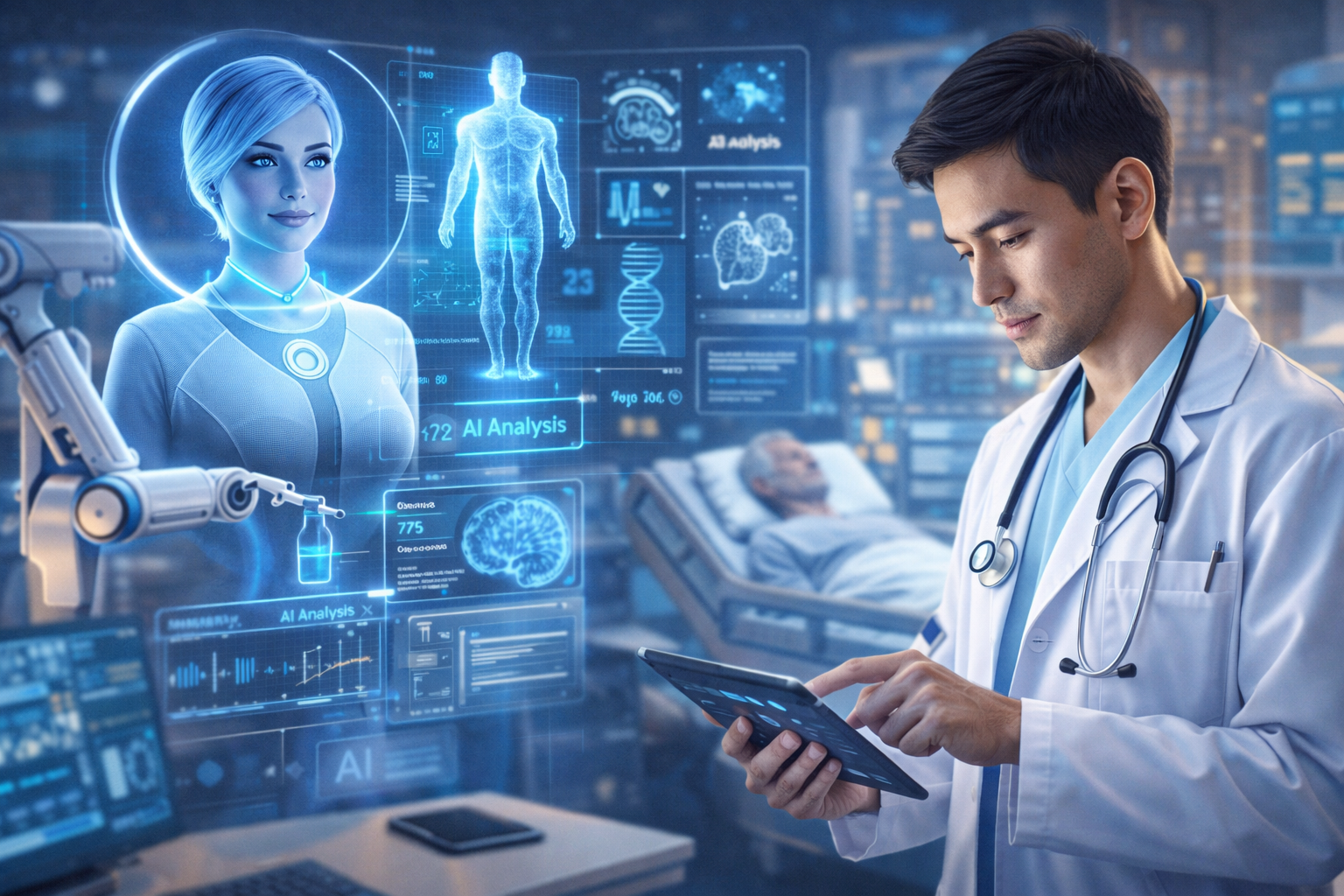
Healthcare systems globally have long struggled with heavy workloads, long waiting times, and rising costs. AI is stepping in as a powerful support system. Instead of replacing doctors, it acts like a super-assistant that processes huge amounts of data in seconds.
AI can analyze medical records, lab reports, research papers, and patient history much faster than humans. This helps doctors make decisions quickly and more accurately. The goal isn’t to remove the human touch — it’s to give healthcare professionals better tools so they can focus more on patient care.
Today, many hospitals already use AI-driven software to support diagnosis, treatment planning, and patient monitoring.
Faster and More Accurate Diagnoses
One of the most impressive areas where AI shines is medical diagnosis. Detecting diseases early can save lives, but traditional diagnosis often takes time and depends heavily on human experience.
AI systems can now analyze medical images such as X-rays, MRIs, and CT scans with incredible precision. In many cases, AI can detect tiny patterns that the human eye might miss.
For example, AI tools can:
- Identify early signs of cancer
- Detect heart disease risks
- Spot neurological disorders sooner
- Predict potential health issues before symptoms appear
This early detection means patients can begin treatment earlier, improving survival rates and reducing long-term healthcare costs.
Personalized Treatment Plans
Every patient is unique, yet traditional treatment often follows general guidelines. AI is changing this by helping doctors create personalized treatment plans based on individual data.
By analyzing genetics, lifestyle, medical history, and even wearable device data, AI can suggest treatments tailored specifically for each person.
This approach is known as precision medicine. Instead of “one-size-fits-all” treatments, healthcare is becoming more customized and effective.
Patients benefit from:
- Fewer side effects
- Faster recovery times
- Better long-term health outcomes
It’s a big step toward truly patient-centered care.
AI is no longer limited to chatbots — autonomous technologies like Agentic AI are now fundamentally transforming how businesses operate.
You can explore this topic in detail along with real-world examples here:
Agentic AI: The Next Big Technology Wave Transforming Businesses in 2026
.
AI-Powered Virtual Health Assistants
Healthcare isn’t limited to hospitals anymore. AI-powered virtual assistants are bringing medical support directly into homes.
These smart assistants can:
- Remind patients to take medication
- Monitor symptoms
- Answer basic health questions
- Schedule appointments
- Track fitness and wellness data
For people with chronic conditions, this kind of daily support can be life-changing. It reduces hospital visits while helping patients stay on track with their treatment plans.
In rural or remote areas, virtual assistants are also improving access to healthcare where doctors may not be easily available.
Reducing Doctor Burnout
Doctors and nurses often work under extreme pressure. Long hours, heavy paperwork, and administrative tasks can lead to burnout.
AI is helping reduce this burden by automating routine tasks such as:
- Medical documentation
- Appointment scheduling
- Billing and insurance processing
- Patient record management
With less time spent on paperwork, healthcare professionals can spend more time with patients — which improves both care quality and job satisfaction.
Smarter Hospitals and Predictive Care
Hospitals are becoming smarter thanks to AI-driven analytics. Predictive systems can now forecast patient admissions, identify high-risk cases, and optimize resource allocation.
For example, AI can predict:
- Which patients are likely to need ICU care
- Potential disease outbreaks
- Equipment maintenance needs
- Staffing requirements
This level of planning helps hospitals operate more efficiently and be better prepared for emergencies.
Challenges and Ethical Considerations
While AI in healthcare brings huge benefits, it also raises important questions.
Some key concerns include:
- Data privacy and security
- Bias in AI algorithms
- Dependence on technology
- Regulatory and ethical guidelines
Healthcare organizations must ensure that AI systems are transparent, secure, and fair. Human oversight will always remain essential.
AI should support healthcare professionals — not replace their judgment.
What This Means for the Future
The future of healthcare looks more connected, intelligent, and patient-focused than ever before. AI will continue to evolve, bringing new tools and innovations that improve care and accessibility.
We can expect:
- Earlier disease prevention
- More remote healthcare services
- Faster medical research breakthroughs
- Improved global healthcare access
Instead of reacting to illness, the healthcare industry is moving toward preventing it before it happens.
Final Thoughts
AI is not here to replace doctors — it’s here to empower them. By combining human expertise with machine intelligence, healthcare is becoming faster, smarter, and more personalized.
For patients, this means better care, earlier treatment, and healthier lives. For doctors, it means better tools and less administrative burden.
The healthcare revolution has already begun, and AI is leading the way toward a healthier future for everyone.
 Written by Shreyansh This website is promoted and supported by SkyGlow Digital.
  https://skyglowdigital.in |
  +91 92174 84653